
Introduction
Travel and photography have always been natural companions — the impulse to document extraordinary places, to bring a piece of experience home in visual form, is as old as the camera itself. But the gap between the blurry, poorly composed snapshots most travelers produce and the stunning images that make social media feeds genuinely inspiring is not primarily a matter of equipment. It's a matter of knowledge, intention, and practice. Whether you're shooting with the latest mirrorless camera or your smartphone, this guide will dramatically improve the quality of images you bring home from your next trip, which you can book through Air1Fares.
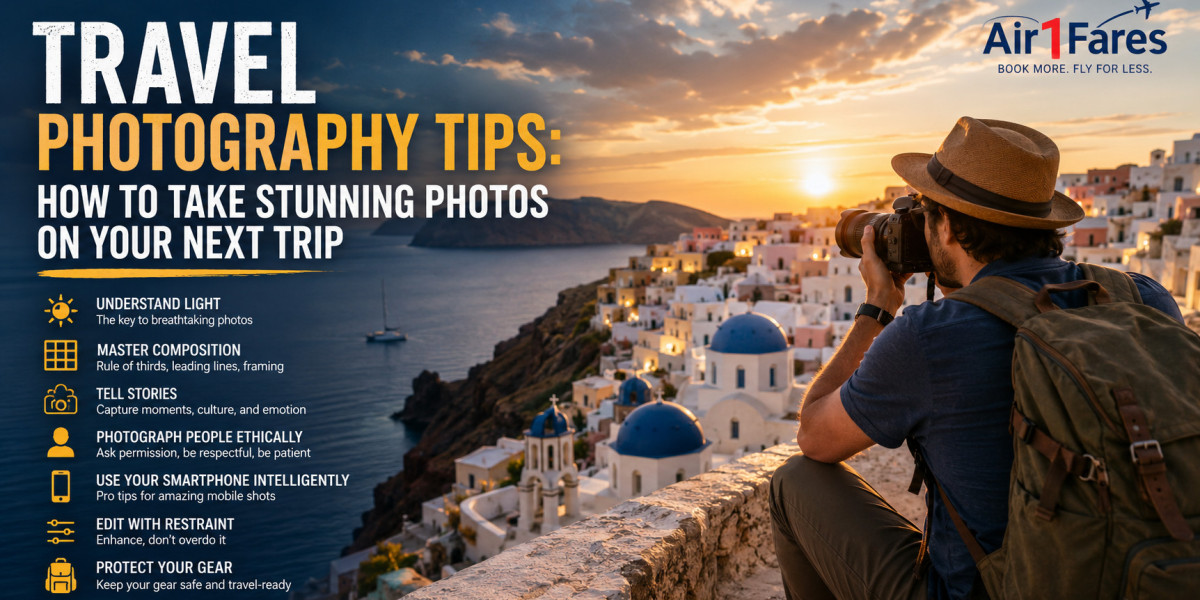
Understand Light: The Photographer's Raw Material
Photography is, literally, writing with light. Everything else — composition, subject matter, equipment — is secondary to the quality, direction, and color of light. The golden hours — the first hour after sunrise and the last hour before sunset — produce warm, directional, beautiful light that flatters virtually every subject: landscapes, architecture, and portraits alike. The blue hour — the 20–30 minutes immediately before sunrise and after sunset — produces a cool, magical quality of diffused light that is particularly suited to cityscapes and seascapes.
Midday light — harsh, overhead, contrasty — is generally the enemy of travel photography. Use midday for indoor activities, market exploration, and eating; plan your outdoor photography for the golden and blue hours. This single adjustment to your shooting schedule will transform the quality of your travel images.
Master Basic Composition
Composition — the arrangement of elements within the frame — is the foundation of compelling photographs. A few key principles: the rule of thirds (mentally dividing your frame into a 3×3 grid and placing your subject at intersection points rather than the center) produces more dynamic images than centered composition. Leading lines — roads, rivers, walls, railway tracks — draw the viewer's eye through the frame and create depth. Framing your subject through a doorway, arch, or foliage creates natural context and layered depth. Look for foreground interest that adds dimension to landscape shots.
Tell Stories, Not Just Postcards
The most memorable travel photographs tell stories — they capture a moment of life, emotion, or interaction rather than simply documenting that a place exists. Instead of photographing only the grand vista, look for the details that make a place specific: the pattern of shadows on a market stall, the expression on an elderly vendor's face, the steam rising from street food, the way a child's feet don't quite reach the ground on a too-big bicycle. These particular, specific details are what make travel photography resonate long after the trip ends.
Photograph People Ethically and Effectively
Portraits of local people are among travel photography's most powerful subjects — and among the most ethically complex. Always ask permission before photographing someone directly; a smile and a raised camera is a universally understood request. In some cultures and contexts, payment for portraits is expected; have small bills available. Many of the most compelling travel portraits come from patience: spending time in a location before photographing, allowing people to become comfortable with your presence.
Work Your Subject: Don't Shoot and Move
Novice travel photographers make a single image of a subject and move on. Experienced photographers work a subject from multiple angles, distances, and perspectives before moving. Crouch down and shoot from low angle. Step back and include environmental context. Move closer and fill the frame with details. Shoot both horizontal and vertical orientations. This exploratory approach consistently produces better images and develops your compositional eye over time.
Use Your Smartphone Intelligently
Smartphone cameras have advanced to the point where professional photographers genuinely use them for serious work. The best smartphone travel photography principles: shoot in ProRAW mode if available (more editing latitude); use portrait mode judiciously for people and objects (not landscapes); use gridlines to compose with the rule of thirds; avoid digital zoom (move physically closer or crop in editing); shoot into the light (backlight) for dramatic silhouettes and sunlit subjects; and use the phone's night mode for low-light scenes rather than flash.
Edit With Restraint
Post-processing is an essential part of modern photography, not a form of cheating. Basic adjustments — exposure, contrast, highlights, shadows, white balance, cropping — can transform a mediocre frame into a compelling image. The most common editing mistake among travel photographers is over-processing: boosting saturation and clarity to cartoon-like extremes. Aim for images that look like an idealized version of the scene you actually witnessed, not a digitally fabricated fantasy.
Protect Your Gear
Travel exposes photography equipment to risks that don't exist at home: humidity, dust, sand, theft, and physical impact. Use a quality camera bag designed for travel — padded compartments, weather resistance, and a profile that doesn't screech "expensive camera inside" to potential thieves. A small silica gel packet in your bag prevents humidity damage in tropical destinations. A lens cloth is always in your pocket. Have serial numbers recorded and your equipment listed on your travel insurance policy.
The Best Souvenir You Can Bring Home
Great travel photographs are among the most enduring souvenirs any trip can produce. Unlike purchased objects, they carry the specific memory of a place, light, and moment that belongs entirely to your experience. They are also shareable — photographs of genuine quality communicate the reality of a destination in ways no verbal description can fully match. Invest in developing your photographic eye on every trip, and your images will become a body of work that maps your life's travels in extraordinary detail.
Conclusion
Travel photography is a skill that rewards practice and intentionality over equipment and budget. The traveler who wakes for the golden hour, composes thoughtfully, and looks for stories rather than postcards will consistently produce images that outlast the trip itself. Book your next photography-worthy adventure through Air1Fares — the world's most photogenic places are waiting.